
Music Futures: Igniting Innovation and Sustainable Growth in Liverpool's Music Ecosystem
The Music Futures Roundtable in Liverpool served as the official launch of a five-year program uniting academia, government, and industry to position the city as a sustainable "City as a Sandbox" for music, tech, and creative innovation, addressing regional imbalances and fostering cross-sector growth in areas like health and enterprise.
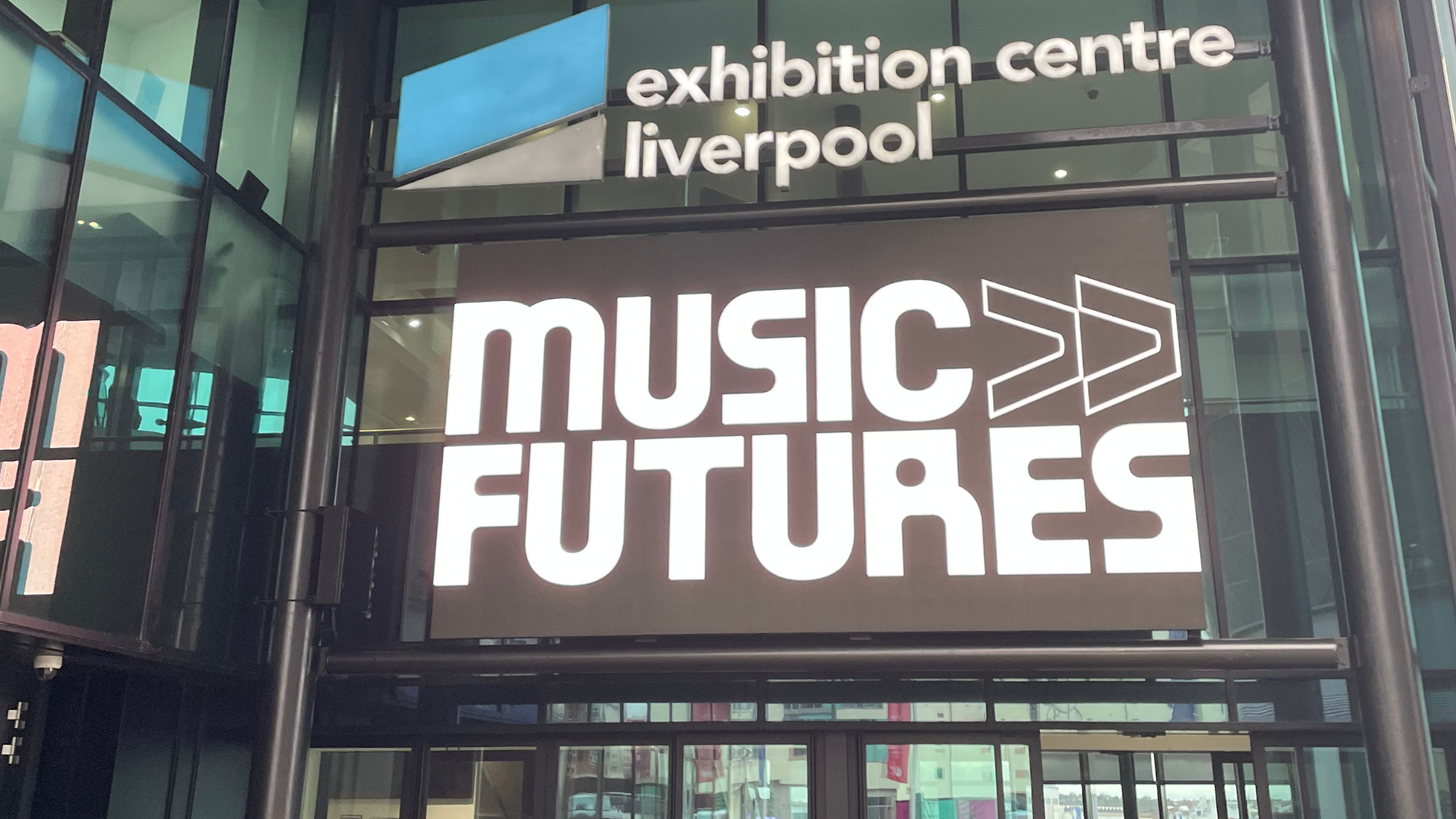
Thursday, November 27th, 2025, marked the official launch moment for the Music Futures Roundtable: Placemaking Through Music Ecosystems at the ACC Liverpool Group campus, setting the stage for a five-year program dedicated to inclusive, sustainable innovation in music. With Liverpool's UNESCO City of Music status as a foundation, the event focused on how music, technology, and creative industries can be powerful drivers of inclusive economic growth, positioning the city region as a global testbed for the future of music.
As a fractional lead for Creative, Tech & Entrepreneurship at the Chamber of Commerce and Founder of GoodShip*, I witnessed first-hand the powerful convergence of national expertise and local ambition during the day's proceedings. The room, which included guests from Portugal and Finland, was filled with a diverse attendee list, bringing together leaders from academia, government, the live sector, and tech.
The 'City as Sandbox' Concept and Strategic Partnerships
The event was framed as a kick-off, strongly emphasising place-making in the Liverpool City Region (LCR). The central concept introduced was the “City as a Sandbox” using Liverpool as a living laboratory to test new business models, audience experiences, and cross-sector collaborations, particularly with the health and civic innovation sectors.
University and Institutional Alignment
Music Futures is a five-year program led by the University of Liverpool in partnership with LJMU and 27 partners44. The University highlighted its significant role in place-making, working with Liverpool City Council and the LCR Combined Authority to drive innovation at scale. Key assets offered to partners include research expertise, a student talent pipeline, and strong convening power to bring together industry, government, and the third sector5555.
The ACC Liverpool Group / M&S Bank Arena plays a critical role as a strategic partner. As a wholly-owned Local Authority Trading Company (LATCo) that has generated £2 billion in economic impact since 2008, the venue operates as a “living lab”. It offers real events, audiences, in-house ticketing data, and operational expertise for testing and validating new music and experience technologies, such as those experimented with during the Act 1.5 series focused on decarbonising touring.
National Context and Regional Imbalance
The morning session focused heavily on Enterprise & Entrepreneurship. Matt Cartmell, CEO of Music Technology UK (MT UK), provided a national overview, noting that while the UK is a global leader, the investment landscape faces challenges, with later-stage funding shrinking and a stark geographical distribution problem. A significant 70% of music tech companies are headquartered in London/Southeast, with only 4.7% in Northwest England. MT UK is supporting Music Futures to actively address this regional imbalance by exploring a Northern Corridor expansion and a potential joint hub in Liverpool.
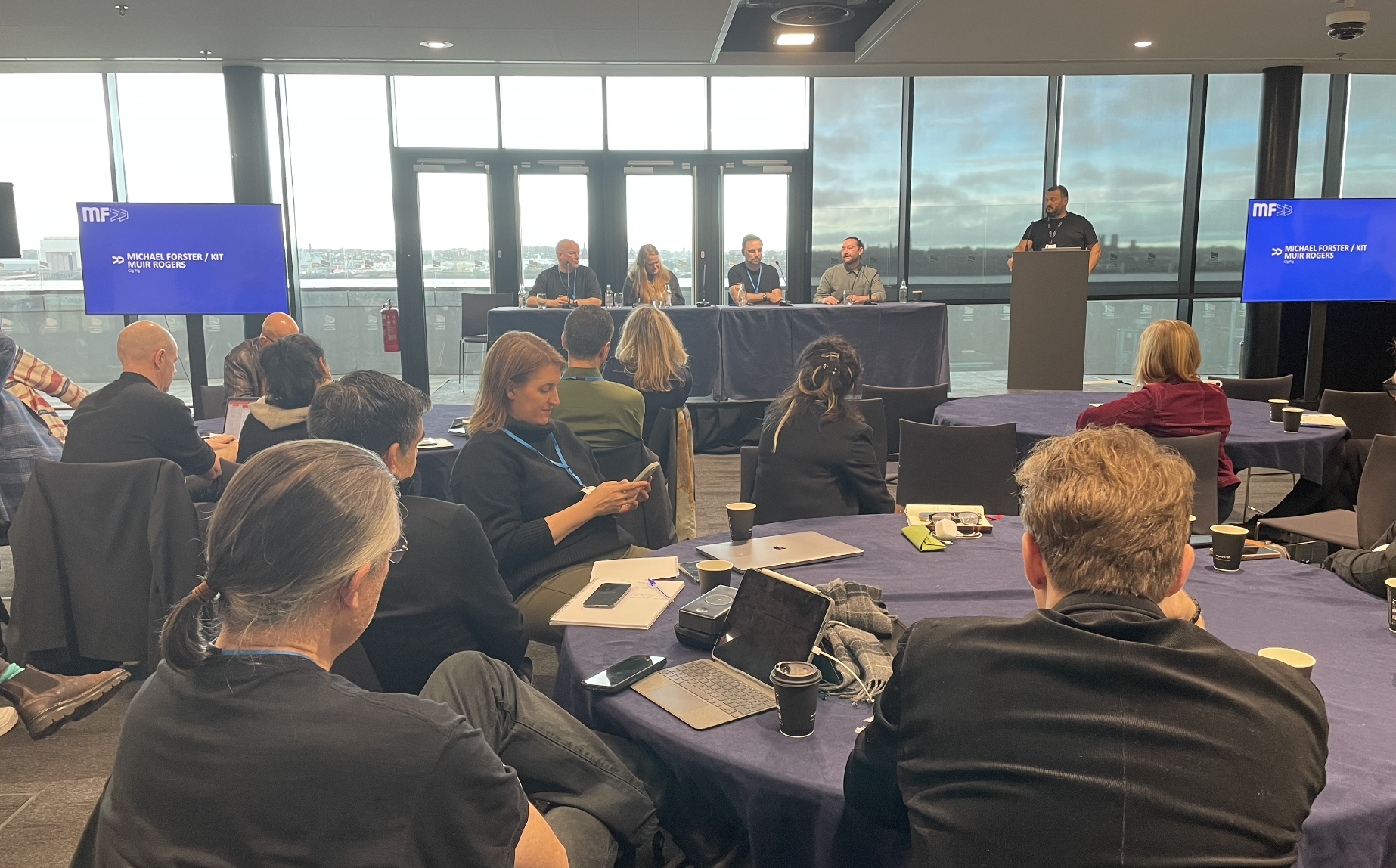
Leon Neville of the BPI and Anthony Achille of Abbey Road REDD discussed the successful BPI Grow Music accelerator and the regional expansion strategy of Abbey Road Red, showcasing a clear appetite to host programs and support export opportunities in Liverpool.
Focus on Enterprise, Infrastructure, and Sustainability
The afternoon shifted to Infrastructure and the enabling environment. Helen Cross from the LCR Combined Authority and Kate Bull from Liverpool City Council detailed the city region's strategic priorities. The region's 6,500 creative businesses contribute £4.5 billion GVA.
Key strategic development projects are currently underway, all developed with partners in response to market demand:
- Music Lab R&D Facility: An innovative space for artists, music businesses, and creatives for product development and testing11.
- Abbey Road to the North: A proposed state-of-the-art recording/rehearsal facility, led by the LPO, aimed at skills development and global positioning12.
- Immersive Liverpool: A global audio-visual attraction using Liverpool’s musical heritage to create content through the Music Lab and local creators.
Sustainability and Social Impact
A major cross-cutting theme discussed across the day, and specifically in one of the afternoon breakouts led by Sarah Haynes, was Sustainability. Liverpool is the first UN Accelerated City for the decarbonisation of live events15. The event highlighted the Act 1.5 events, which experimented with decarbonising touring, and the immediate hosting of Expedition 2, a wrap-up conference on this topic. This commitment firmly embeds environmental responsibility into the growth strategy for the music sector.
Furthermore, the work being done in the health and wellbeing space, such as the House of Memories program for dementia support and new Music Futures health-related projects, demonstrates the focus on social value and improving health outcomes as part of the University’s wider strategy16. The opportunities in the $1 trillion wellness/healthcare market were identified as a critical application for music technology, with companies like MediMusic and projects like the Civic Health Innovation Labs being leveraged.
Roundtables: Barriers and Opportunities
The roundtable discussions surfaced critical barriers and opportunities:
- Innovation Barriers: Venue owners being in "survival mode," fragmented support for freelancers, a lack of scale-up support, and the complexity of music rights were all cited as stifling innovation.
- Cross-Sector Opportunities: A significant opportunity was identified in integrating the strong regional healthcare cluster with music therapy applications. This involves live musicians streaming to hospital wards—a project GoodShip* is currently involved in—and leveraging tech talent from the gaming/entertainment sectors.
- Talent and Skills: A skills gap was identified, particularly around educating artists on an entrepreneurial mindset and basic business fundamentals like IP and cash flow. The success of Centric Music hiring tech graduates over music graduates was presented as a critical insight.
Conclusion and Next Steps
The Music Futures launch event was more than a conference; it was a commitment. The convergence of an international network, national music tech leaders, and Liverpool’s powerful civic and academic institutions has created a platform positioned for significant impact. By addressing the regional investment imbalance, by using cross-sector opportunities (especially in sustainability and health), and systematising support for founders through initiatives like what we’re build at GoodShip* with our collaboration with Liverpool Chamber, Liverpool is truly preparing to become the “sandbox city” for the future of music, creative and tech.
Related articles



Explore our collection of 200+ Premium Webflow Templates